× Careers Staff Only Personnel Sub Call-In Service Health & Safety
CONTACT
Main Operator 315.433.2600
District Superintendent 315.433.2602
Adult Education 315.453.4455
Business Office 315.433.2614
CNYRIC 315.433.8300
Instructional Support       315.433.2627
Student Services 315.433.2604
Labor Relations 315.433.2629
Personnel 315.433.2631

Mid-State RBERN


RBERNing Questions

RBERNing Questions is a professional learning podcast, produced by Mid-State RBERN, where we answer your most compelling questions about teaching, serving, and supporting multilingual learners. We connect teachers and leaders of English Language Learners (ELLs) and Multilingual Learners (MLs) with experts in our field who will address timely and specific questions relating to instructional practices, teacher collegiality, and outreach to students and their families.

To receive CTLE credit, listen to the audio recording and complete the quiz for that podcast episode. Once you submit your responses to the Google Form, a link will be provided to register on Frontline.

Season 3 | Episode 19
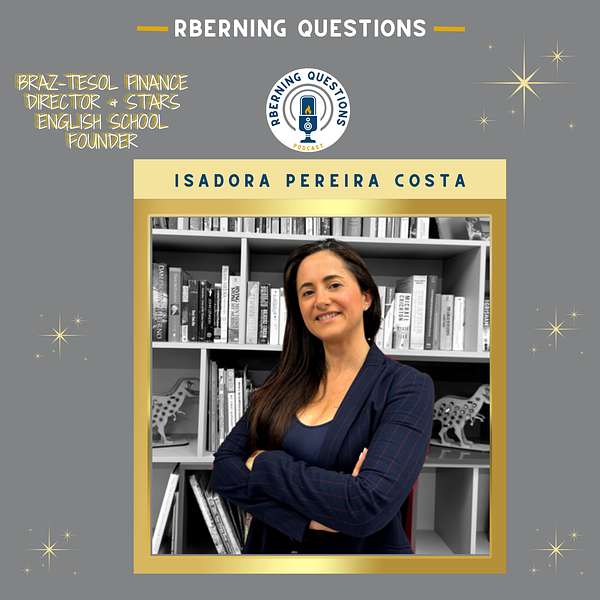
BRAZ-TESOL: Leading, Inspiring & Innovating
Isadora Pereira Costa
In this episode of RBERNing Questions, we sit down with Isadora Costa, Founder and Director of Stars English School and Finance Director for BRAZ-TESOL, to explore innovative approaches to teaching English in Brazil. She shares her insightful journey from starting as a young teacher to creating her own school with a unique immersion methodology. Learn more about BRAZ-TESOL’s efforts in providing professional development, fostering community, and advocating for teachers. Plus, Isadora shares her thoughts on the role of AI in modern teaching. If you’re an educator who wants to be inspired to chart your own path in supporting multilingual learners, tune in now!
Season 3 | Episode 18
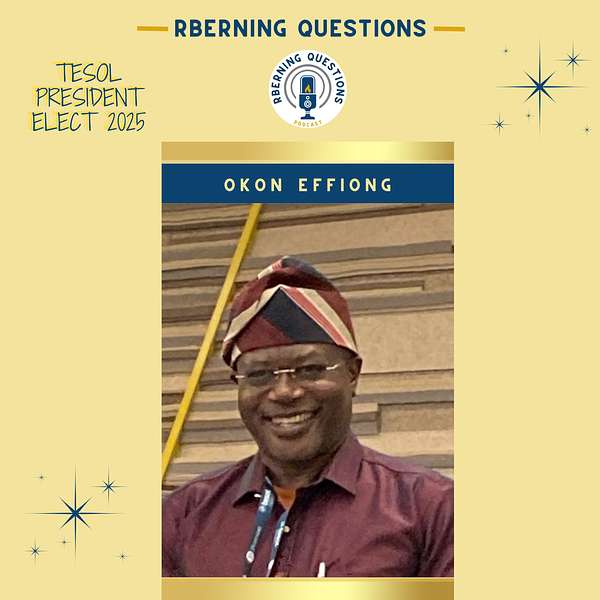
Vision, Journey & Global Connection: A message from TESOL President Elect
Dr. Okon Effiong
In this episode of RBERNing Questions, Dr. Okon Effiong, the incoming President of TESOL, sits down to talk to us at the TESOL Convention in Long Beach, California. Dr. Effiong shares his inspiring journey from aspiring genetic engineer to prominent educator in the field of English Language Learning. He recounts his first TESOL convention, his transition into leadership roles, and his efforts in founding the Africa English Language Teachers Association. Dr. Effiong also discusses the challenges and underrepresentation faced by African teachers, as well as his views on current political issues affecting language teaching. With a vision to advance TESOL's mission of promoting academic excellence and research, as the President Elect 2025, he emphasizes the importance of flexibility, advocacy, and global membership engagement in the rapidly changing landscape of education.
Season 3 | Episode 17
PBL from Start to Finish: The Process, The Challenges, & The Triumphs
Francesca Davi & Luisa Frontino
In this episode, co-teachers share their secrets on how to prepare your ELLs and MLs for a PBL culminating event in which they showcase their civic-minded projects to a myriad of education specialists, field questions, and discuss possible solutions and future pathways to explore on their chosen topics. Ms. Davi and Ms. Frontino provide a comprehensive, start to finish guide that can be easily implemented by any educator with an interest in developing more structured, student-driven Project-Based Learning.
Season 3 | Episode 16
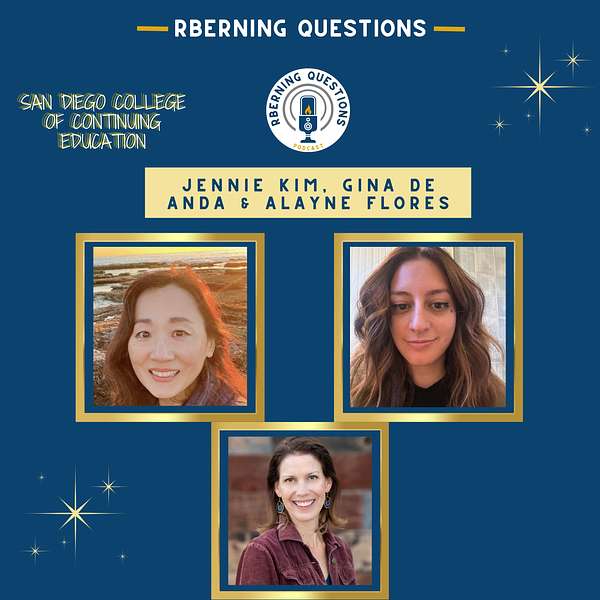
Unlocking the Power of Custom GPTs for Speaking Practice
Jennie Kim, Gina De Anda and Alayne Flores
How can AI redefine the way we teach and support multilingual learners’ speaking progress? In this episode, three dynamic presenters from the TESOL 2025 Convention: Alayne Flores, Gina De Anda, and Jennie Kim discuss the practical use of AI chatbots to provide that much-needed speaking practice outside of the classroom. Tune in to hear about how they are integrating AI tools like Custom GPTs and Chatty Bot in their instruction for all levels of multilingual learners. Discover the challenges they've faced, the innovative solutions they've implemented, and the future possibilities for AI in curriculum planning.
Season 3 | Episode 15
From Classrooms to Communities: A Conversation
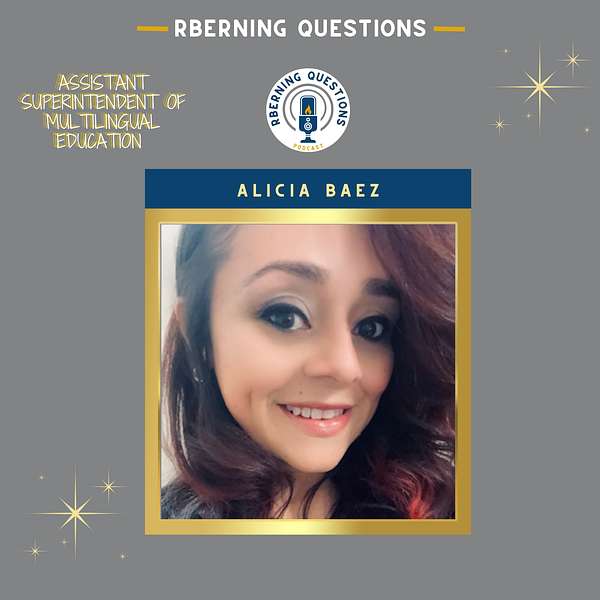
Alicia Baez
In this episode, Alicia Baez, the Assistant Superintendent for the Division of Multilingual Education at Buffalo Public Schools discusses her extensive role in overseeing ENL programming, bilingual education, and community outreach. Alicia shares her personal journey inspired by her father, also an educator, and her tireless advocacy for bilingual and dual language programs. She highlights the importance of culturally and linguistically inclusive education, teacher support, and effective leadership. Alicia also discusses various initiatives like the Bilingual School Principals’ Consortium and new programs designed to support immigrant and refugee students in Buffalo. As we wrap up, Alicia emphasizes the need for educators to ensure every student feels represented and safe in their learning environment.
Season 3 | Episode 14
AI Tools for Success in the ESL Grammar Classroom
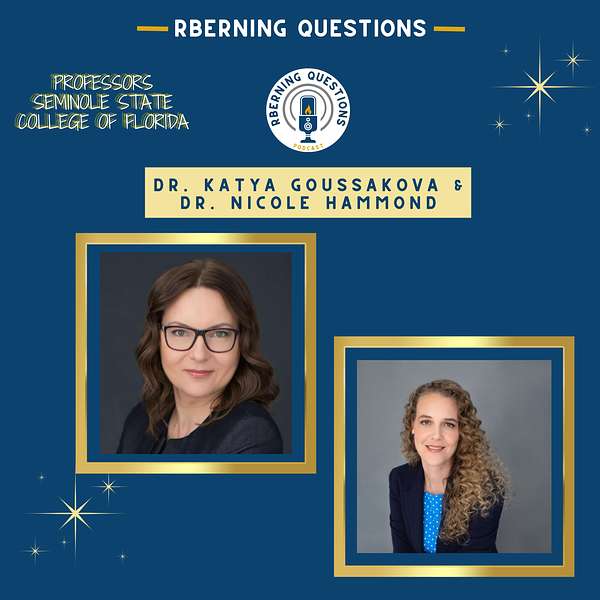
Drs. Katya Goussakova & Nicole Hammond
In this episode of the RBERNing Questions podcast, host Yasmeen Coaxum continues the TESOL 2025 Presenters’ Series from the TESOL Convention 2025 with Dr. Katya Goussakova and Dr. Nicole Hammond from Seminole State College of Florida. They discuss their presentation titled 'AI Tools for ESL Grammar Teachers,' their backgrounds in English language teaching, and their innovative methods for integrating AI, specifically Chat GPT, into grammar instruction. Tune in to hear their insights on creating engaging grammar activities using AI, the future of AI in education, and the importance of personalization in teaching. If you LOVE grammar instruction and are looking for fun, new ways to use AI to engage with your students, this episode is for you!
Season 3 | Episode 13
PBL with ELLs in Mind: A Collaborative, Culminating Event
Maria Friedland
In this episode, Maria Friedland explains her diverse roles and how she collaborates with educators and institutions to develop professional learning opportunities and curricular resources for K-12 multilingual learners. She shares her teaching journey from Brazil to the U.S. and her numerous initiatives, notably her passion project, “PBL with ELLs in Mind: A Collaborative, Culminating Event.” This conversation is full of delightful stories about students who participated in this event, highlighting the impact of collaborative projects on multilingual students. If you’re interested in facilitating a passion project to empower your ELLs and MLs, Maria shares insights to help you on your journey to seeing your educational event come to fruition. Tune in now!
Season 3 | Episode 12
Listening: Why Our Learners Struggle and How to Fix It
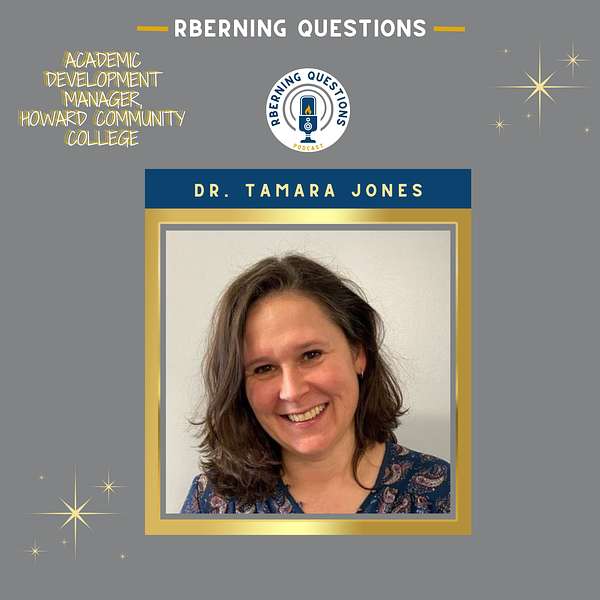
Dr. Tamara Jones
In this 3rd episode of our TESOL 2025 Presenters’ Series, featuring Dr. Tamara Jones, we explore the common pitfalls of traditional listening instruction in classrooms. Dr. Jones reflects on her own experience of simply playing recordings and offering multiple-choice questions, highlighting that this method primarily provides practice rather than actual teaching. She delves into the challenges of understanding the listening process, both for students and educators, and raises and answers the important question of how to effectively teach listening skills.
Season 3 | Episode 11
Student Perspectives on Integrating AI Language Models in Writing Instruction
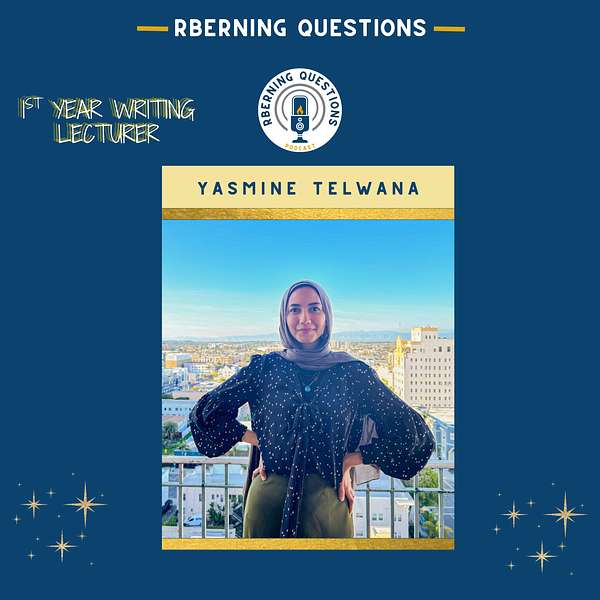
Yasmine Telwana
In this episode, Yasmine Telwana, a first-year writing lecturer at the University of Minnesota, discusses her insights on integrating AI into academic writing courses. Telwana, a multilingual educator with experience both in Egypt and the US, shares her research on student perspectives towards AI, highlighting both its benefits and challenges. The conversation covers the development of classroom strategies for ethical AI use, differences in AI adoption between native and non-native English speakers, and the importance of involving students in shaping AI policies. Additionally, the episode touches on Telwana's other contributions at the TESOL Convention, including her work on multimodal assignments and digital literacy. If you want to gain valuable insights on how to effectively incorporate AI tools in educational settings to enhance students' learning experiences, this is a must-listen!!
Season 3 | Episode 10
Tech-Savvy Language Education: The Role of Apps
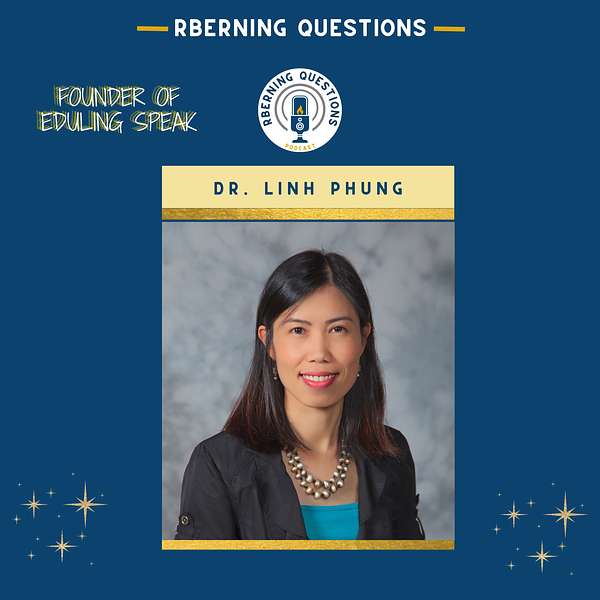
Dr. Linh Phung
In the first episode of our TESOL 2025 Presenters Series, Dr. Linh Phung, an entrepreneur and tech enthusiast, shares her journey from Vietnam to the U.S., where she pursued her passion for English education and technology. She discusses her role at Chatham University and her ventures in developing language learning apps like Eduling Speak. The conversation dives into the benefits of using technology beyond classroom time, gamification, AI in education, and actionable tips for educators looking to start their own educational projects. Linh emphasizes the importance of finding joy in teaching and continuous learning. At the TESOL Convention this year, Linh’s presentations included “Culturally and Linguistically Inclusive Materials for Multilingual Ethnic Minority Learners” and “Empowering Language Learners Through Multilingual and Multimodal AI-Powered Texting.”
Season 3 | Episode 9
Educating with Love: Using Powerful Talks to Cultivate Habits of Success
Lizette Roman
In this episode, Lizette talks about the impact of being “all in” in education, and being part of a “systematic change” through her dynamic EMS Talks event. She delves into her childhood experience of being educated in a system with no bilingual academic support, and how that shifted into a career in bilingual education where she fully evolved in her mindset of how that support should be provided in a way that “appreciates the bilingual mind”. What does it really mean to be a culturally responsive educator? What methods are we using to really ensure we are in tune with our communities? How can we push ourselves past professional stagnation and into redeveloping our passion? How can we show our students that there is real world purpose in what we’re teaching them while instilling “habits of success”? These questions and more will be addressed as Lizette educates us with love to inspire us to reach higher heights as educators.
Season 3 | Episode 8
Creating Synergy with Curriculum, Instruction, and Equity
Nate Franz
In this episode, Mr. Franz discusses the actions taken to truly implement the above mission in the Jamesville-DeWitt Central School District’s 5 year (2020-2025) strategic plan. He shares some of the challenges and successes of carrying out the initiatives developed to support the mission, which seeks to provide a more equitable learning experience for all students. Listen in to get a better understanding of the process of taking ideals for creating better learning environments and forming them into concrete, measurable actions that are clearly reflected throughout the district in a meaningful way.
Season 3 | Episode 7
It Takes a Village: How a District is Collectively Supporting Its Students
Dr. Harmony Booker-Balintfy
In this episode, Dr. Booker-Balintfy shares her professional and personal experiences in supporting multilingual learners since 2022. She discusses the diverse student population her district serves, including over 421 multilingual learners, and their restructuring efforts to better accommodate these students. Harmony elaborates on the importance of accountability, explaining New York State's levels of English proficiency and the significance of the Seal of Biliteracy. She highlights various initiatives, and community-wide dialogues on diversity, equity, and inclusion. Harmony also touches on the challenges and successes of implementing equitable practices and the strategic plan guiding these efforts. The podcast concludes with Harmony sharing her personal journey and a thought-provoking question for educators on their approach to teaching multilingual learners.
Season 3 | Episode 6
Achieving District-wide ELL Success: A Community Effort
Lyda Ragonese
Lyda Ragonese grew up in a bi-lingual household where her father was fluent in English, French and Hmong. She attended a school without an ENL program and quickly adapted to academic life in the US. Listen in as she tells RBERNing questions how she achieved this. During our discussion, she reveals the initiatives that have greatly boosted graduation rates of ELLs in her school district in Syracuse, and the role of support in helping all educators understand the challenges that our ELLs might face. If you have burning questions about how to tap into the full potential of your ELLs and MLs, placing them on a path to success, tune in today!
Season 3 | Episode 5
Supporting our ELLs: A Parent’s Perspective
Adelina Blanco-Harvey
In this eye-opening conversation, we engage and learn from a parent who has put 4 of her children through the Uniondale school system; all success stories who have graduated. Adelina Blanco-Harvey herself is an ELL, and in her role as a board trustee, she has a hand in creating policies that truly serve her community of students. As a parental resource, she ensures that parents understand how they can best support their children within the school system, from advice on proper testing to other services pertinent to their success as students. As an advocate for all students, she advises highlighting your children’s multilingualism as a strength, and stresses the importance of presence as a parent of ELLs, regardless of potential language barriers. Finally, she emphasizes the ways that communication can serve as a key component to maintaining relationships between parents and school administrations.
Season 3 | Episode 4
Using Social Media and Relatable Resources to Build a Culture of Reading
Dr. Lorraine Radice
In this episode, PreK-12 Director of Literacy, Dr. Lorraine Radice, shares her extensive experience and strategies for supporting multilingual learners by enhancing literacy. She highlights methods to promote reading among students, the importance of including contemporary voices in English curriculums, and leveraging social media to foster a love for reading. Additionally, Lorraine addresses the impact of AI and technology in the classroom, stressing the need for critical reading skills and effective use of digital tools. This conversation covers the role of parents in literacy development, curriculum inclusivity, and tips to engage various stakeholder groups in building a strong reading culture.
Season 3 | Episode 3
Showcasing Cultural Stories Globally: The Cross-Cultural Storytelling Project
Melissa Campesi
In this episode, Melissa discusses impactful ways to showcase the rich cultural landscape of our multilingual students on an international level. Through the Cross-Cultural Storytelling project, both students and educators hold and mold the power of personal cultural narratives that can open doors to better communication both in and outside of the classroom, expanding the reach of a deeper understanding of our global diversity . If you’re curious about learning a step by step process of how to tap into your students’ cultural resources, publishing their work on a dynamic platform, or even how to implement a lesson around the significance of the “cultural iceberg” at different levels, listen in for these practical tips!
Season 3 | Episode 2
Ungrading: A New Way to Look at Assessment
Babi Kruchin
Does receiving a grade help students focus on becoming better writers or getting better grades? What is the concept of ungrading and how is it implemented? How can you stop students from making “superficial changes” to a writing text instead of digging deeper to improve their writing? What is portfolio assessment, and what are the advantages of it? These questions and more will be addressed as Babi Kruchin discusses her methods for inspiring students to improve their writing skills by truly understanding and internalizing the criteria necessary for better academic writing. Learn the difference between “assessment of learning” and “assessment for learning,” and how you can use this knowledge so that students can take ownership of their academic writing development and become “a community of readers and writers” who are also able to self-assess in order to develop. If you want to establish a “toolbox” to help your students grow in their writing abilities, this episode is for you!
Season 3 | Episode 1
From Invisible to Visible: Changing the World One Student at a Time
Principal Samantha Power Pugh
Are you “Illuminating the voices of the voiceless” through your teaching? If not and you want to know how, listening to this episode is a must! Principal Samantha “Power” Pugh kicks off this episode by giving us a wealth of information on the Off School Grounds (OSG) educational leadership group, including over 150 principals, superintendents, school leaders, and chancellors. She highlights her head, hand & heart leadership style and shares how the simple questions: “How are you doing?” and “Are you okay?” can be transformative in the lives of students and administrators, particularly in underserved communities. She discusses moving from invisibility to visibility due to the care and mentorship of her early educators, and how knowing your purpose can open the door to widespread impact. Whether you’re a principal, an administrator, or an educator thinking about becoming a leader, Principal Power Pugh has some answers for your burning questions.
Season 2 | Episode 20
Dispelling the Myth of Mimicry as a Measure of Success
Tasha Austin
What kind of world does your teaching create? In this episode, Tasha Austin gives all educators food for thought to ponder this question. She challenges us to think about how separated communities inside the school building could be more diversified and inclusive environments that lend equal support to all learners. Tasha unpacks the idea of the “mimicry” of a standardized version of English, and takes apart the premise that there is one form of any language that is better than another. How can educators "design spaces of learning" that can elevate knowledge about the importance of using language across various situations instead of seeing mimicry as the only overarching end goal? This is just one of the burning questions we dive into in this episode!
Season 2 | Episode 19
The Power of Podcast PD
Tan Huynh
Are you interested in starting your own podcast to share your knowledge as an educator? Are you an avid listener of podcasts? How do you prefer to consume Professional Development? In this open, candid discussion, Tan breaks down the steps to creating your own podcast in the education sphere, discusses his motivation behind starting a podcast and how it has been beneficial for him, and encourages educators to understand what they have to offer in terms of sharing the knowledge they’ve accumulated. He discusses how viewing podcast listening as having “fireside chats” with experts can lead to expansive growth for educators. He also talks about the value of differentiated, sustained, collaborative PD . Tan provides a wealth of resources for educators, so if you’re interested in finding out more about him and his contributions to the field, this episode will indeed answer some of your burning questions.
Season 2 | Episode 18
Building Virtual Reality (VR) Worlds to Enhance the Multilingual Learning Experience
Amany Alkhayat
This forward-thinking, tech-focused episode delves into the innovative work of guest, Amany Alkayat, an educator and researcher specializing in virtual reality (VR) and artificial intelligence (AI) for language education. Amany shares her journey from teaching English as a Foreign Language in Cairo to pursuing advanced studies in instructional technology at Columbia University's Teachers College. She emphasizes the transformative impact of VR on student engagement and learning through embodied cognition and interactive storytelling. The discussion highlights her various roles, including her contributions to TESOL, virtual teleconferences, and educational VR platforms like Frame VR and Engage VR. Amany also discusses the practical applications and benefits of VR in project-based learning, ethical concerns regarding AI, and her efforts to enhance educational accessibility and quality using technology. The conversation concludes with insights on necessary equipment, lesson planning, and the future of AI in education. If you have burning questions about using VR in your multilingual classroom, tune in now!
Season 2 | Episode 17
Technology: A Bridge Between the Real World and the Classroom
Yu Jung Han
Dr. Yu Jung Han’s first interest in English came through music and wanting to understand lyrics. Having artists like Michael Jackson and New Kids on the Block as her first English teachers, then experiencing a heavily “textbook-based” style of learning before university, she was discouraged when the English she’d found in music didn’t match up to what her teachers said “was not what you learned from the textbook.” In this episode, find out how this experience led to her current goal in teaching, which is to create “a learning ecology that connects students in and out of classroom practice and life.” Dr. Han uses relatable analogies to explain the impact of tech and specifically Generative AI in education, and how we can manage it as educators. She also explains how she has encouraged students to use ChatGPT to augment their learning. If you’re looking for a way to refresh your perspective on technology in education, you can’t miss this episode!
Season 2 | Episode 16
Rethinking Meaningful Writing: The Responsible Role of the AI Citizen in the Future of Education
Chris Mah
Chris says that as an educator, he wants to critique the way language holds so much power. Are we now allowing AI to take over the power dynamic we hold over language as human beings, or is it up to us to shift the way we wield that power? In what ways can we help students develop their unique voice in the era of AI? The discussion in this episode dives into these questions and more as Chris discusses the AI tools he’s currently developing to help students hone language to their advantage. He also questions the validity of standardized writing assessments and the way colleges evaluate their applicants. How can we move away from the formulaic ways of assessing writing and more towards using “writing as a way of thinking?” How can low-stakes writing come into play? If you’re looking for answers to some of your burning questions about how educators can best adjust in this AI powered world, tune in now!
Season 2 | Episode 15
Creating Digital Age Learning Environments for ELLs
Heather Rubin
What exactly is a project based technologically infused learning journey and how can we bring parents into the digital fold to be part of their children’s learning journeys? In this episode, find out what digital age learning ecosystems are and how to use technology to build them! Heather Rubin discusses how these ecosystems provide students with a voice and a choice, highlights a seamless, effective way to integrate learning methods for the 21st Century, touches on the 5 Cs for 21st century learning, and dives into why viewing and visually representing are literary skills. One thing to think about as you listen to this episode is, “Are you preparing your students to be digital citizens of the world?” Get ready to have your burning questions about this, and more, answered on today’s episode!
Season 2 | Episode 14
Lifting Your Voice to Create the Refuge You Seek
Zaynab Abdi
Today, RBERNing Questions welcomes Zaynab Abdi, an immigrant and refugee youth ambassador, humanitarian aid consultant, and social justice advocate. Zaynab shares her inspiring journey from Yemen to the US and discusses her work with Green Card Voices and Human Concern USA. She highlights the importance of storytelling in advocacy, emphasizing the need for immigrants to control their own narratives. Zaynab also talks about her graphic memoir, 'Voice for Refuge,' which details her experiences and is written in both English and Arabic to reach a broader audience. The conversation explores issues within the US educational system, the challenges and strengths of immigrant students, and the impact of compassionate and empathetic community engagement. Lastly, Zaynab provides advice for young immigrants looking to share their stories and make a change.
Season 2 | Episode 13
Eye on Immigration: Advocating for your Students’ Humanity
Dr. Tatyana Kleyn & Daniela Alulema
Do you have enough information on immigration policies, struggles, and realities to support your immigrant PreK- 12 students? In this episode, Dr. Kleyn and Ms. Alulema discuss CUNY IIE - City University of New York Initiative on Immigration and Education. Find out how to access CTLE courses to enhance your knowledge on immigration. Discover how the initiative highlights the strengths of mixed status immigrant communities. Delve into the initiative’s guiding pillars: “Learn, Act & Advocate,” and discover how these pillars lead to the centering of people, their stories, and humanity.
Season 2 | Episode 12
Bridging Language and Science Content to Empower All Students
Dr. Okhee Lee
Dr. Okhee Lee, a professor at NYU Steinhardt School of Culture, Education, and Human Development, talks about the challenges and progress in integrating multilingual learners into STEM education. Dr. Lee shares her journey from South Korea to becoming an influential figure in the field, her role in developing the Next Generation Science Standards (NGSS), and her work in aligning science and language education. Our talk covers the impact of traditional education models, the importance of asset-based approaches, and the role of multimodal and multilingual learning methods. This episode also delves into Dr. Lee's involvement with the National Science Foundation and various educational initiatives. If you have burning questions about how to engage your MLs in STEM classes, this is a must listen!
Season 2 | Episode 11
Teaching as a Lifestyle: Biology, TESOL & Philosophy
Agbor Effiom
In today’s episode, Agbor Effiam, a lifelong science educator with extensive experience teaching in the US, Thailand, and the Netherlands, shares his transformative journey from struggling to connect with Thai students to becoming a passionate advocate for multilingual education. He discusses his strategies for engaging diverse learners, emphasizing the importance of making students feel their languages are welcomed. By integrating instructional routines focused on literacy, Agbor aims to improve reading comprehension in science education. He also reflects on the concept of teaching as a lifestyle, driven by his family's legacy and his own experiences. Agbor also touches on the challenges educators face and the need to create impactful lessons despite these hurdles. If you are looking for inspiration in ways to feel a connection with your students, this episode is a must-listen!
Season 2 | Episode 10
All About LACI- A Language-Based Approach to Content Instruction
Dr. Luciana de Oliveira
In this episode, Dr. Luciana C. de Oliveira takes us on a deep dive into the teacher education model called LACI- a Language-based Approach to Content Instruction, featured in her latest book: Supporting Multilingual Learners’ Academic Language Development: A Language-Based Approach to Content Instruction. She unpacks the ways teachers can “take advantage of students’ linguistic repertoires,” and discusses how teachers can implement literacy in multi-modal ways to encourage “message abundance.” Learn about the 6 C’s of support for scaffolding material in a multilingual classroom and how elementary teachers have implemented LACI using these C’s. How are you making your classroom “high challenge/high support” for your MLLs? Consider this burning question as you listen in today!
Season 2 | Episode 9
Challenging our Perspectives: How to Empower Newcomers and Ourselves as Educators
Dr. Denise Furlong
This episode’s featured guest, Dr. Denise Furlong, shares insights from her award-winning book 'Voices of Newcomers.' We dive deep into the concepts and practical strategies in the book, which aims to help educators better serve their ELLs and MLs who are completely new to this country. The importance of inclusive language, perspectives in education, holistic professional development for teachers, and the commandments of inclusion are hot topics in this conversation. Dr. Furlong emphasizes ongoing learning, listening to students' and families' needs, and providing equitable experiences in education.
Season 2 | Episode 8
Translanguaging and Descriptive Processes: Using Children’s Literature as a Holistic Confidence Booster
Cecilia Espinosa & Laura Ascenzi-Moreno
When Laura was growing up, “Spanish is a liability” was the societal idea that was so deeply ingrained in the immigrant community that at an early age, she was deprived of learning the very language that all of her family members spoke. For Cecilia, the fact that she did speak Spanish is what prompted a first grade student to suggest that she apply for a job at a school where “a lot of the students speak Spanish.” Both of these stories highlight how one’s identity around language can play a pivotal role in their professional paths. Now they both strongly advocate for more insightful pedagogy around bilingual education practices. Today’s episode sheds light on more expansive ways to integrate translanguaging into your instruction, causes you to shift your thoughts around what it really means to be literate and the variety of ways that literacy can be demonstrated in the classroom, and touches on the importance of choosing materials that better serve your students. Laura and Cecilia also give us a taste of the juicy resources provided in their book, “Rooted in Strength: Using Translanguaging to Grow Multilingual Readers and Writers.” How can we use the intersection of translanguaging and descriptive processes to shift from a deficit to a “possibilities” perspective when it comes to our multilingual learners’ abilities? Why should educators think of themselves as language policy makers? These and other thought-provoking questions will be answered in today’s conversation.
Season 2 | Episode 7
Assets Based Pedagogy: Tapping into your Students’ Magic
Joy Scantlebury
Today we welcome Joy Scantlebury as she discusses how immersive classroom experiences and “living the language” led to her career as an educator of ELLs who’s been refining her craft for 15 years. A prevailing theme in Joy’s work is using students’ cultural resources and languages to enhance their learning experiences. In this episode, she highlights the benefits of bringing these resources into the classroom, and shares specific examples of how you can also implement this asset based and student centered methodology with the plethora of resources your ELLs bring into the school environment. She unpacks how to recognize and foster organic, “magical moments” as opportunities for students to learn and play a crucial role in their academic development. To better understand how to use your students’ goals, aspirations and passions to empower and encourage them on their learning journeys, listen in now!
Season 2 | Episode 6
Curing Antisocial Language Teaching
Dr. JPB Gerald
In this conversation, Dr. JPB Gerald discusses how he began the study of decentering whiteness in language teaching, explores the structures at play that can demotivate students, and dives into the thought-provoking content in his book, “Antisocial Language Teaching: English and the Pervasive Pathology of Whiteness”. He offers possible ways to tackle the issues prevalent in our field, and shares how solidarity among educators plays an important role. If you have a burning question about how you can shift your mindset to better understand and support your ELL’s, listen in now!
Season 2 | Episode 5
Building Capacity & Community: Inside the World of NYS TESOL
Shawnna Sweet
In this episode, learn about Shawnna’s journey from teaching to leadership; what inspired her to begin her work at her local RBERN, and how she continually grew in her roles to support ELLs & MLs, including the shift to her current role as president of NYS TESOL. She emphasizes the importance of recognizing leadership qualities in practitioners in our field and “tapping” them to fill leadership roles. Shawnna also gives us a peek into some of the new ways NYS TESOL is keeping its work current and sustainable. For a behind the scenes look at the thought process behind NYS TESOL biggest event, the annual conference, listen in now!
Season 2 | Episode 4
Creating a Multilingual, Multiage Summer Program that Shines
Monica Baker
In this episode, join Monica Baker on an educational summer experience that is anything but your traditional summer school. How can you bring together multilingual learners ranging in age from 3 to 16 in an atmosphere that cultivates support, engagement, leadership and a thriving classroom community dynamic? Ms. Baker has the answer! Listen in as she breaks down the specifics of her multilingual, multiage summer program and talks about the celebration of multilingualism. She says, “When we shift our mindset away from what feels safe & comfortable as educators… and put ourselves out there and just try, that’s where those connections form that are so positive.”
Season 2 | Episode 3
Reimagining Dialogue on Identity, Language, and Power with NYS TESOL Past President
Dr. Ching-Ching Lin
Although Dr. Ching-Ching Lin has been a TESOL professional for many years, beginning her career as a high school teacher, she emphasizes her passion for using her knowledge to volunteer and make an impact that goes beyond teaching to opening up dialogues among her colleagues. One of the topics of those dialogues is the idea that we need to rethink how we conceptualize multilingual learners and our version of “helping” them. She says, “we need to re-educate ourselves in order to create an equitable space.” These are just a few of the notions she asserts during our conversation about her book “Reimagining Dialogue on Identity, Language, and Power”. Listen in as Dr. Lin takes us back to the prevailing issues of pandemic times to express her motivation for editing the book, and talks about the impact of dialogue in academic research.
Season 2 | Episode 2
Leading with Purpose with NYS TESOL Past President
Dr. Christine Seebach
In this episode of RBERNing Questions, Dr. Christine Seebach takes us on a journey from her friendly Spanish-speaking childhood neighbor to immersing herself in Spanish language and culture abroad, to her current role as a leader in the field of TESOL. She discusses the influence that being “tapped” by someone who has acknowledged your value can have on the trajectory of your career. You will also hear fond descriptions of her experience on the NYS TESOL board, and all of the benefits she’s received from being president and part of the organization. Find out why NYS TESOL “is everything”, and get a glimpse behind the scenes of what the organization has in store. Are you thinking about taking on a leadership role? Are you wondering about the challenges and opportunities that lie in leadership? If so, tune into this episode!
Season 2 | Episode 1
Implementing SOFLA: An Interactive Online Learning Experience
Dr. Helaine W. Marshall
We kick off the first episode of this season with Dr. Helaine W. Marshall! She discusses the origins of SOFLA, the Synchronous Online Flipped Learning Approach. Find out what it means to make online teaching “warm” and how SOFLA contributes to this. Learn how to get students excited about doing work outside of class through the “movie trailer” step in SOFLA, and finally, discover how to implement this innovative, international approach to online learning that creates social presence between student peers. Get ready to have your burning questions about this, and more, answered on today’s episode!
Season 1 | Episode 36
Introducing Our New Host!
Meet the new host of Our Burning Questions.
Season 1 | Episode 35
Changing Perspectives on Emergent Multilingual Learners and Supporting Families
Susanne Marcus
Lau vs. Nichols and the Aspira Consent Decree, legal proceedings from 1974, ensured that English language learners & multilingual learners receive age- and grade-level appropriate instruction. Since then, supporting ELLs/MLs looks very different, especially with regard to emergent multilingual learners in pre-k and early childhood. In this episode, Susanne Marcus discusses supporting English language learners at the early stages of development and how to support and welcome their families.
Season 1 | Episode 34
Benefits of Participation in PLCs and Supporting ELLs/MLs in Content Areas
Jian Liu
Being active in a professional learning community has many benefits for content area teachers and ENL teachers alike. In this episode, Jian Liu shares his unique perspective as a former ELL and high school mathematics teacher regarding participating in PLCs and teaching literacy with mathematics concepts.
Season 1 | Episode 33
Empowering Teachers to Build Connections for Student Success
Dr. DJ Kaiser
Focusing on and building upon assets is a key component of being a part of the Teacher Student Success Network as evidenced in this episode with Dr. DJ Kaiser. Listen to find out more about his work to empower teachers to build connections extending from the students to the world.
Season 1 | Episode 32
Green Card Voices
Tea Rozman & Jennifer Raponi
The Green Card Voices Project has provided an opportunity for many immigrants to share their experiences from their lives before and after arriving in the United States. Listen as Dr. Tea Rozman shares the purpose of this project, as well as the work that her organization has done and will do moving forward. Jennifer Raponi also shares her collaborative role and the amazing student empowerment that has resulted from it.
Season 1 | Episode 31
Creating Support Systems for ELLs/MLs
Jamie Scripps
Multi-Tiered Systems of Support (MTSS) are essential to ensuring academic success for all learners, including English language learners/multilingual learners. Jamie Scripps from the Rush-Henrietta School District joins us to share the system that she and her colleagues have created to identify ELLs/MLs with disabilities and track their progress.
Season 1 | Episode 30
Supporting ELLs/MLs with Disabilities
Ariana Rosario
Have you ever wondered about how a learning disability might affect new language learning and what support can be provided to ensure success for ELLs/MLs? Ariana Rosario from the North Syracuse Central School District joins me in this episode to share her experiences with supporting and advocating for ELLs/MLs with disabilities.
Season 1 | Episode 29
Family & Student Resources
Dr. Ron Woo
The Statewide Regional Bilingual Education Resource Network (RBERN) serves the entire state of New York in providing a plethora of resources to support ELLs/MLs as well as their families, schools, and communities. Join us for this episode as we discuss the importance of utilizing and sharing these resources.
Season 1 | Episode 28
Learning to Embrace "Spanglish" as a form of Translanguaging
Alex Medrano
Spanglish has historically been discouraged in both English and Spanish classrooms across the U.S. However, by discrediting this blended language, we are not allowing students to use their entire linguistic repertoire. Please join Steve Sofronas of Ellevation as he explores this topic in depth with Alexandra Medrano, a teacher in Colorado who shares her journey from discouraging to celebrating Spanglish in her classroom.

*In a special collaboration with Ellevation, Mid-State RBERN is pleased to offer CTLE credits for listening to the Highest Aspirations podcast episodes.
Listen Here
Season 1 | Episode 27
Graduation Requirements for ELLs/MLs Success
Marina Vinitskaya
Interpreting educational transcripts from another country can be challenging to evaluate for equivalent credits toward graduation for many reasons. In this episode, we discuss the importance of transcript translation and interpretation as well as considerations about how to implement inclusive practices with ELLs/MLs and their families so that students are on the path to academic success.
Season 1 | Episode 26
Opportunities for ELL/ML Success
Anna Stukes
English Language Learners/Multilingual Learners have many assets that can be capitalized on to ensure their success. Listen to this episode to learn about different opportunities that are available for ELLs/MLs to support their academic success and personal growth.
Season 1 | Episode 25
Supporting Ukrainian Students
Svetlana Stowell
In light of recent global events, we have seen an influx of Ukrainian families arriving in the United States. Please join me as I speak with Svetlana Stowell to talk about the importance of supporting, welcoming, and including Ukrainian families in schools and communities. Original air date: 10/31/22
Season 1 | Episode 24
Emergent Multilingual Learners
Dr. Zoila Morell
What is an emergent multilingual learner, what is the connection to early learning, and what is the importance of providing professional learning opportunities for early educators? Join me for a conversation with Dr. Zoila Morell as we kicked off the 2022 Symposium on Emergent Multilingual Learners in Early Childhood. Original Air Date: 1/11/22
Season 1 | Episode 23
Creating Linguistic & Culturally Responsive Education Ecosystems for Language Learners
Dr. Sonia Soltero
What is “culturally embedded literacy”? In this episode, Dr. Sonia Soltero joins RBERNing Questions for a second time to talk about how to create a linguistic and culturally responsive education ecosystem for language learners. Listen for more on teacher burnout, asset-based approach to educating MLs, culturally embedded literacy, and the self-assessment tool that she created. (Original recording date: 6/21/21)
Season 1 | Episode 22
School Library Resources for ELLs
Allison Comes & Alicia Sherman
Have you ever wondered about what’s out there in terms of resources to support your English language learners and who might be able to help you locate some of those resources? Look no further than your school librarian! Listen as school library specialists Allison Comes and Alicia Sherman share their love of reading by sharing several resources and talking about how school librarians can create spaces where families of ELLs feel welcome. (Original recording date: 6/4/21)
Season 1 | Episode 21
Explicit Direct Instruction (EDI)
John Hollingsworth
In the preface of their book entitled, Explicit Direct Instruction for English Learners, John Hollingsworth and Dr. Sylvia Ybarra state: “It’s not a focus on test scores that raises test scores. It’s a relentless pursuit of optimizing the effectiveness of the way students are taught - before the tests are given - that raises test scores.” (2013, p. vii) In this episode, Mr. Hollingsworth discusses how DataWORKS, the company that he started with his wife, Dr. Ybarra, came to be. He also shares the many useful tools that were created to support English language learners and explains why it works. Listen to learn more! (Original recording date: 6/3/21)
Season 1 | Episode 20
PRHYLI
Diana Vázquez & Kimberly Soto Rivera
What does “PRHYLI” stand for? Not only does it stand for the Puerto Rican/Hispanic Youth Leadership Institute, but it also stands for empowerment, leadership, and advocacy. Join Diana Vázquez, PRHYLI State Coordinator, as she talks about her work in overseeing this statewide program. Kimberly Soto Rivera, who is a current college student and PRHYLI alumna, also shares her experiences from being a part of the institute as a former high school student and how it has shaped her future. (Original recording date: 6/1/21)
Season 1 | Episode 19
Transitioning to In-Person Learning with SupportEd
Meghan Gregoire-Smith & Mindi Teich
The requirement for schools to quickly convert to remote learning as a result of the pandemic presented many significant challenges with regard to equitably teaching multilingual learners. To discuss what considerations teachers and administrators should be mindful of moving forward, I am joined by Meghan Gregoire-Smith and Mindi Teich, where we discuss these considerations and more. (Original recording date: 5/21/21)
Season 1 | Episode 18
Culturally Responsive Teaching for MLs with SupportEd
Dr. Diane Staehr Fenner
Why does leadership matter when supporting multilingual learners? Please join Dr. Diane Staehr Fenner as she discusses the role that administrators play in ensuring that advocacy and equity are manifested in the classroom. (Original recording date: 5/13/21)
Season 1 | Episode 17
Diane Staehr Fenner, Pt. 2 - Leadership for ELLs
Dr. Diane Staehr Fenner
Why does leadership matter when supporting multilingual learners? Please join Dr. Diane Staehr Fenner as she discusses the role that administrators play in ensuring that advocacy and equity are manifested in the classroom. (Original recording date: 5/13/21)
Season 1 | Episode 16
Diane Staehr Fenner, Pt. 1 - Advocacy for ELLs
Dr. Diane Staehr Fenner
All teachers are teachers of English Language Learners. In order to support our nation’s ELLs with regard to their academic and future professional success, it is essential to recognize the importance of advocacy. Please join Dr. Diane Staehr Fenner, President of SupportEd, as she discusses how we can create a shared sense of responsibility for advocating for English language learners. (Original record date: 5/10/21)
Season 1 | Episode 15
Myths About Second Language Acquisition
Dr. Sonia Soltero
In this episode, Dr. Sonia Soltero, Professor at DePaul University, author, and proponent of biliteracy and bilingualism, addresses many common myths about second language acquisition and shares her insight about advocating for equity for English language learners. Please join us for this important and informative conversation as she answers RBERNing questions!
Season 1 | Episode 14
Speech, Special Education, or ENL?
Kelley Burt & Lourdes Roa
This episode addresses one of the biggest challenges we face as educators of multilingual students: How do we accurately determine if a multilingual student may or may not need support beyond just English language development? And if we determine that the child does need additional support, how will that be different from what we would provide for a monolingual English speaking student? Listen to professional speech/language pathologist Kelley Burt and bilingual special education expert Lourdes Roa discuss these challenges and share some tips for best supporting multilingual students who may need or already receive special education services.
Season 1 | Episode 13
ELL Students' Perspectives FIRST EP of 2020-2021
ELL Students
Here it is, dear listeners: the most important episode of this podcast that will ever be made - no disrespect at all to any of the incredible educators who are also guests - I think they would agree! It is the most important because it gives us a glimpse into the minds, hearts, and experiences of the young people we serve. Nothing is more powerful or important than centering student voices in our work as culturally responsive educators, especially the voices of those who have been historically silenced as so many multilingual individuals have experienced. Please accept this episode as a gift from these brilliant, insightful young leaders who are co-creating our future right now.
Season 1 | Episode 12
Discourse & Multilingual Literacy LAST EP of 2019-2020
Mario Palma & David Burns
There is a lot of information in the world of education about discourse, background knowledge, literacy, and how all of these ideas are intertwined as we get to know our students. Listen as our guests Mario Palma and David Burns from American Reading Company share how teachers can build more awareness around students’ types of discourse, how we all navigate multiple types of discourse, and how we can use that reflection and knowledge to support students’ literacy development in multiple languages!
Season 1 | Episode 11
Supporting Students with Interrupted/Inconsistent Formal Education
Dr. Lisa Auslander
Supporting SIFE can be a daunting challenge, whether a school has 1 student with interrupted schooling or 100, and Dr. Lisa Auslander is on a mission to “demystify” all the ways in which we can meet the needs of this heterogeneous group of students! If you are hoping to learn more about the unique needs of SIFE and ways in which you can support them in your classes, please join co-host Collette Farone-Goodwin, Mid-State RBERN’s resident SIFE specialist, as we explore the wealth of knowledge, research, and resources that Dr. Auslander shares in this episode.
Season 1 | Episode 10
How to be an Advocate for ELLs
Jen Raponi
Oftentimes, we know our students and their families need support and access within their education experiences that they simply aren’t getting. In this episode, professional development specialist and advocate Jen Raponi shares the what, why, and how of advocacy for ELLs. Jen’s experiences and suggestions apply across a vast spectrum of advocacy topics, so if you are wondering how to center the voices of your students and their families in your advocacy, how to advocate in ways that are most impactful, what to advocate about, or any and all of the above, this episode is for you!
Season 1 | Episode 9
Academic Conversations with Elementary ELLs
Dr. Jeff Zwiers
If you’re looking for ways to build authentic, meaningful conversation time into your lessons, listen to Dr. Jeff Zwiers as he shares practical and powerful strategies in this episode! A room full of elementary students all speaking might sound overwhelming at first, and Dr. Zwiers’ approaches make the planning and implementation of these kinds of lessons so accessible and applicable for all teachers. Give your students agency and voice as you plan for some really great conversations in your virtual or physical classrooms!
Season 1 | Episode 8
ELL Shadowing & Conversational Discourse with Secondary ELLs
Dr. Soto
Let’s talk about talk! If you have listened to some of our previous episodes, you have probably heard many of our expert guests speaking about the importance of literally and metaphorically hearing ELL student voices in the classroom; this episode expands on that theme. Listen to what Dr. Soto’s fascinating research findings tell us about ELLs speaking in their classrooms, and hear some practical strategies for how and why to embed more speaking into your everyday lesson planning. Check out the article linked below entitled “Creating Classroom Buzz” as well as Dr. Soto’s practical and powerful books to discover many ways to uplift your students’ voices.
Season 1 | Episode 7
Multilingual Family Connections & Multilingual Ed.
Dr. José Medina
It can be challenging for monolingual teachers and schools to make connections with families who speak languages other than English. In this dynamic conversation, Dr. José Medina combines his deep knowledge of dual language programming research with his moving testimonios on being a multilingual learner, teacher, administrator, and coach. He generously shares with us some pivotal and thought-provoking strategies for building meaningful relationships with multilingual families and for cultivating a multilingual mindset as we plan lessons, even if we are monolingual educators. You’ll laugh, you’ll cry, you’ll be inspired to action by Dr. Medina’s passionate commitment to equity for all students!
Season 1 | Episode 6
Co-Teaching
Dr. Maria Dove & Dr. Andrea Honigsfeld
We are aware of a few “glitchy” moments in this recording, but they do not interfere with the overall content/comprehensibility of the episode. Co-teaching may be more challenging than ever during the coronavirus pandemic, and it also is more exciting and innovative than ever! Listen to a conversation with two of the leaders in research about co-teaching relationships: Dr. Maria Dove and Dr. Andrea Honigsfeld. Find out what they say is “non-negotiable” when it comes to co-teaching, and learn a lot of quick and easy-to-apply practices that can take your co-teaching relationships from cooperative to truly collaborative. Listen with your co-teacher and then check out the links below to amazing shared resources!
Season 1 | Episode 5
Supporting ELLs in Science
Dr. Okhee Lee & Christopher Leece
This episode is all about “doing science and using language” with the incomparable Dr. Okhee Lee. Christopher Leece of OCM BOCES co-hosts as we ask Okhee all of “RBERNing Questions” about how teachers can engage ELLs (and all students!) in inquiry and discovery through the use of “compelling phenomena” in alignment with our updated science standards. Listen to learn more about what science and language DO together in our classrooms!
Season 1 | Episode 4
Collegiality & Collaboration
Dr. Laura Baecher
Welcome to a conversation about connection. In this episode, Liesl asks Dr. Laura Baecher, President of NYSTESOL and Professor at Hunter College, “RBERNing Questions” about collegiality among teachers of ELLs - What does it look like? Why is it important? How can we be intentional about it? And more! Please enjoy, and then reach out to your fellow TESOL colleagues to keep growing your collegiality and collaboration!
Season 1 | Episode 3
Cultivating Resilience & Creating Equity
Elena Aguilar
You’re going to want to take notes while listening to this episode! It is such a gift to be able to share this conversation about resilience and equity with one of the foremost researchers and writers on these topics in education: Elena Aguilar. In our conversation, Elena shares her experiences and advice on how we can “re-center the individual child” in education and how we can understand ourselves more deeply, with the ultimate goal of creating learning experiences and environments that are equitable and responsive to our students’ needs while growing our own emotional resilience. Please tune in and then check out all of the incredible knowledge Elena and her team have shared on their website!
Season 1 | Episode 2
Standards-Based Practices for ELLs
Dr. Paulina White
“RBERNing Questions” for this episode center around how to use New York’s ENL Targets of Measurement (“ToMs”) in standards-based classroom activities and assessments. Guest Dr. Paulina White shares her insights into how she has used the ToMs to focus and refine her planning and lessons for both stand-alone and co-taught ENL classes at the middle school level. If you’ve been wondering how to apply the ToMs in a practical way in your classes, this episode is for you! Click here for free related resources!
Season 1 | Episode 1
An Intro to RBERNing Questions!
Liesl Coope & Diane Stevenson
Welcome to the very first episode of this brand new podcast for all teachers of ELLs! This episode features a conversation between podcast host/Mid-State RBERN Resource Specialist Liesl Coope and ENL teacher/Mid-State RBERN ENL Council member Diane Stevenson. Listen in to get all the details on what you can expect from this podcast and to find out how you can submit topics and guest suggestions for future episodes. Keep tuning in each week as we discuss all of “RBERNing Questions”!